
June 30, 2026

How to Style a Bookcase Like a Designer

A bookcase is one of the few things in a room that can look wrong while working perfectly well. The books are all there, the shelves are full, and yet the whole thing feels heavy and a little lifeless. Or the opposite happens: you face an empty étagère with a pile of novels and a few favorite objects in hand, and you freeze.

Good bookshelf styling solves both problems the same way. It treats the shelves less like storage and more like a small composition, where what you leave out matters as much as what you put in. Designers rarely fill a bookcase. They edit it. And the thinking behind a well-styled shelf is far more learnable than it looks, since most of it comes down to a few repeatable decisions you can make with what you already own.


Start With the Right Bookcase

Before a single book goes on a shelf, the piece itself sets the rules.

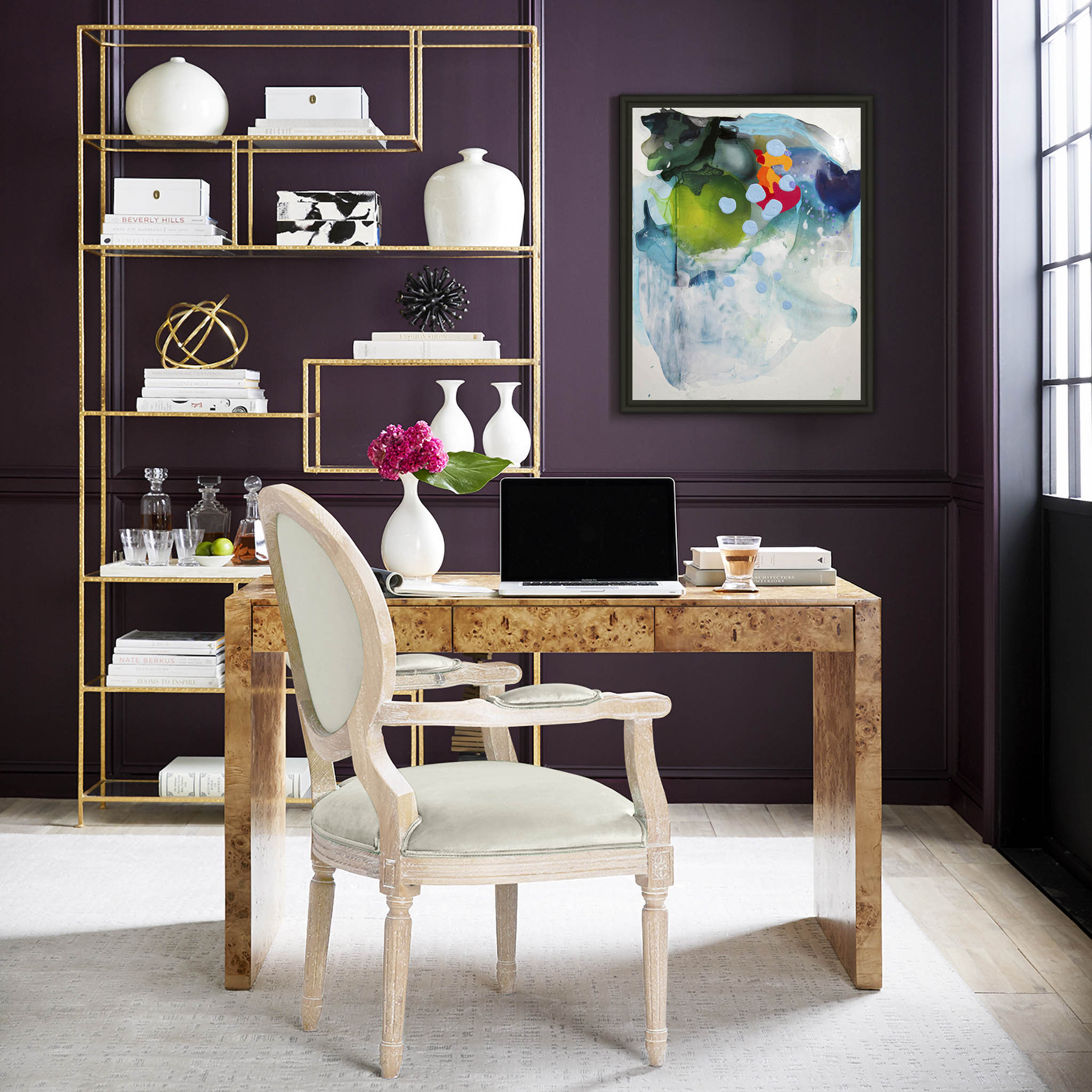
An open étagère, like a slim brass frame with glass shelves, reads as light and architectural. Because you can see straight through it, every object is visible from more than one angle, and the space around each piece becomes part of the look. It rewards a restrained hand. A closed or backed bookcase behaves differently. The solid back panel acts as a backdrop, so vignettes feel contained, and you can layer more densely without the arrangement turning busy.

Material matters as much as structure. A reclaimed wood bookcase brings warmth and a sense of age that makes even new objects feel collected, while a painted or lacquered piece reads cleaner and more formal. If you are still deciding what suits your room, our guide to types of wood for furniture is a useful place to start, because the grain and finish of the piece quietly influence everything you set on it.

A Simple Way to Get the Proportions Right

If one idea separates a styled bookcase from a stuffed one, it is proportion. A helpful way to think about each shelf, and the bookcase as a whole, is in three parts: roughly 60 percent books, 30 percent objects, and 10 percent open space.

The numbers are not something to measure with a ruler. They are a way to catch yourself before a shelf tips into clutter. Most people get the books right and the objects almost right, then forget the last part and pack every gap. That final tenth, the breathing room, is what makes the whole thing feel intentional instead of crammed. Keep the proportion in mind as you work through the three parts below.

Make the Most of Your Books

Books are the foundation of almost every shelf, and how you arrange them changes the entire mood.

Mix horizontal stacks with vertical rows. A run of upright books, broken up by a short horizontal stack, creates rhythm and keeps the eye moving rather than scanning a single flat line. Those horizontal stacks also work as low pedestals, lifting a small object to a height that gives it presence.

Color and spine clutter are worth a thought, too. If your shelves feel noisy, try removing a few dust jackets to reveal the calmer cloth bindings underneath, or group books loosely by color so the palette settles. You do not need to turn every spine inward for that pale, uniform look, though a few pages-out stacks can soften a particularly busy section. The aim is for the books to feel lived-in and read, not staged.

Choose Objects With Intention

This is where a bookcase gets its personality, and also where it most often goes wrong. The instinct is to add more. The better move is to add variety, because the best bookshelf accessories are the ones that earn their place rather than fill a gap.

Aim for contrast across three things: height, shape, and material. A tall sculptural object next to a low, rounded vessel next to a flat stack of books gives the eye somewhere to travel. Set a smooth ceramic against a rough woven texture, or a hard marble edge against soft greenery, and each piece makes the others look better.


Two habits keep these groupings looking composed rather than scattered. Arrange objects in odd numbers, since a trio, or a pair beside a single piece, reads as more natural than an even, evenly spaced lineup. And let one color or material repeat in two or three spots across the bookcase, a hint of brass here, a note of black there, so the eye connects the shelves and the piece reads as a whole rather than a row of separate displays.

The objects that hold a shelf together are usually the ones with a story. A hand-carved curio or an aged artifact carries the sense of having been found rather than bought, and a single piece like that does more for a vignette than a dozen matching accessories. Wisteria's Rare Bird finds are made for exactly this role, each one one-of-a-kind.

Around that anchor, a few quieter pieces fill in. A sculptural ceramic vase or a blue-and-white ginger jar adds form and a controlled hit of color. A bone-inlay box corrals small things and provides a clean, horizontal layer to stack on top of. Lean a framed photograph or piece of art against the back of a shelf instead of hanging it, which keeps the arrangement easy to change. And a little life goes a long way, so a small trailing plant or some sculptural greenery keeps a shelf from feeling like a museum case.

Leave Room to Breathe

The most overlooked part of bookshelf styling is the part where you stop. Empty space is not wasted space. It gives the objects you chose room to be seen, and it signals that the shelf was edited rather than accumulated.

Resist the urge to fill every cube and every inch. Let one shelf hold only a stack of books and a single object. Leave a clear gap beside a vase. On an open étagère especially, that space reads as a choice and keeps the whole piece feeling airy. If a shelf looks finished and you are tempted to add one more thing, that is usually the moment to leave it alone.


Pick Your Style: Color-Blocked or Collected

Most styled bookcases fall into one of two directions, and knowing which one you are after makes every smaller decision easier.

A color-blocked shelf is the more modern, graphic approach. Books are grouped by color, objects stay tonal, and the overall effect is calm and orderly. It suits contemporary rooms and anyone who likes a clean, considered look.

A collected vignette is looser and more eclectic. The appeal here is in the mix: travel finds, old books, a piece of pottery with a chip in it, objects gathered over years rather than bought in one afternoon. Arrangements are asymmetric and a little imperfect on purpose. This is the more layered, lived-in look, and it is where globally sourced and handmade objects come into their own. Neither direction is more correct. Pick the lane that matches your room and your instinct, then let it decide what stays and what goes back in the cupboard.

The Finishing Touches

A few final moves separate a good shelf from a polished one.

Add a little light. A small table lamp on a lower or middle shelf casts a warm glow that softens overhead shadows and makes the bookcase feel like part of the room rather than a wall of storage.

Put the lowest shelves to work. They carry visual weight well and are the natural home for woven baskets that hide cables, blankets, or the overflow that does not need to be on display. Tucking storage down low lets the shelves at eye level stay calm.

Then step back. Look at the bookcase from across the room, not from arm's length, because that is how everyone else will see it. If one area feels heavy, move an object up a shelf. If something is not earning its place, take it out. The editing is the styling.

Bring It All Together

A well-styled bookcase comes down to relationships: the contrast between pieces, the spacing around them, and the few objects that carry a sense of story. Get those right, and the shelves stop being storage and start being one of the best-looking corners of your home.

When you are ready to fill in the gaps, Wisteria's home accessories collection brings together the vases, statuary, boxes, frames, and one-of-a-kind objects this guide is built around, each chosen for craft and character rather than to match a set. Start with one piece you love, build around it, and leave a little room to breathe.

FAQs About Bookshelf Styling

How do you style a bookcase with too few books?

Lean on objects instead of buying more books. Stand a few books face-out to fill more visual room, add a basket or a larger vessel to take up volume, and bring in a plant for height. Let open space carry the rest rather than spreading a thin layer of books across every shelf.

How do you style a bookcase with too many books?

Be willing to take some off the display. Decide what you actually want seen at eye level, then move the overflow to lower shelves, closed storage, or baskets. A bookcase does not have to hold every book you own, and editing the collection down is what keeps it from reading as pure storage.

Do the objects on a bookcase need to match?

No. A mix of materials, finishes, and even eras almost always looks more collected than a coordinated set. Aim for variety that still feels connected through a shared color or texture, rather than pieces that match.

How often should you restyle a bookcase?

A bookcase is not set-and-forget. Refreshing a few objects with the seasons, or whenever the arrangement starts to feel stale, keeps it looking considered. You rarely need to redo the whole thing, just swap two or three pieces and edit again.